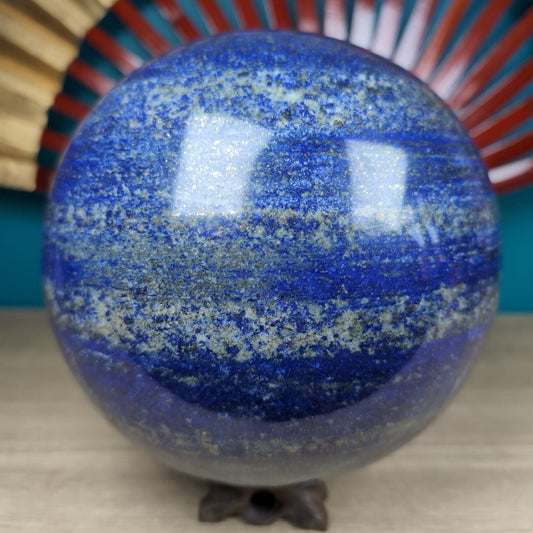
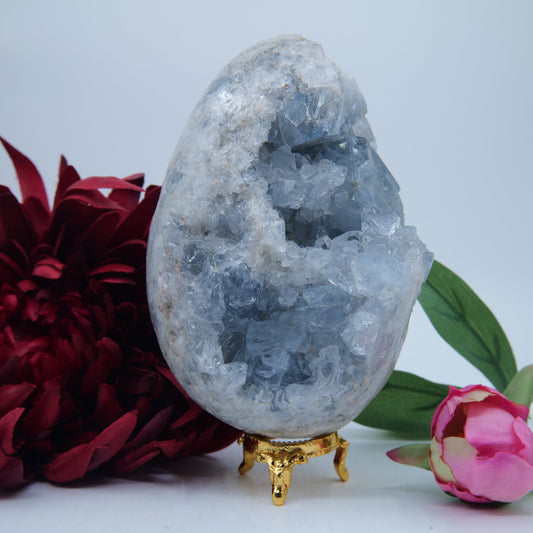
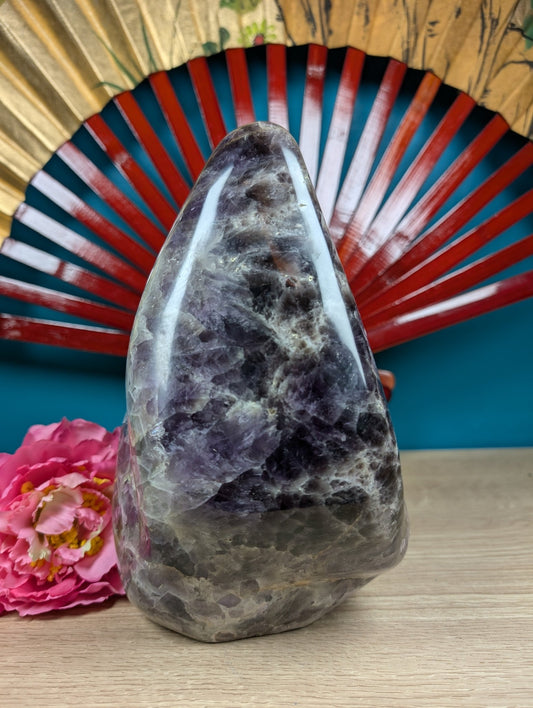
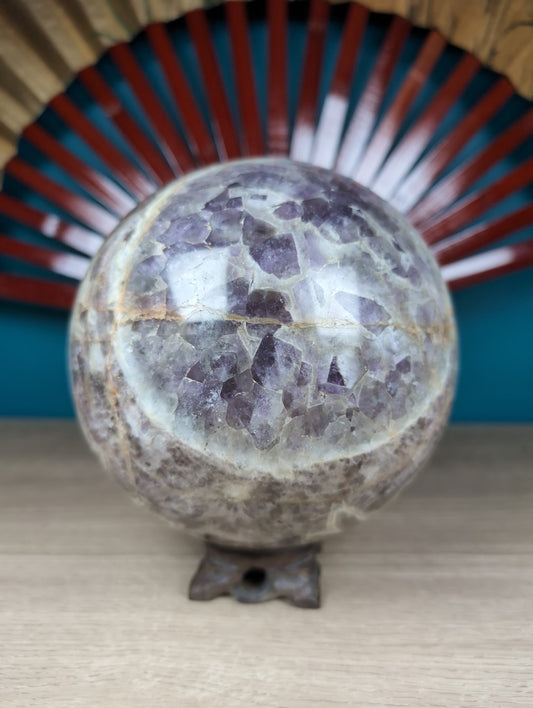
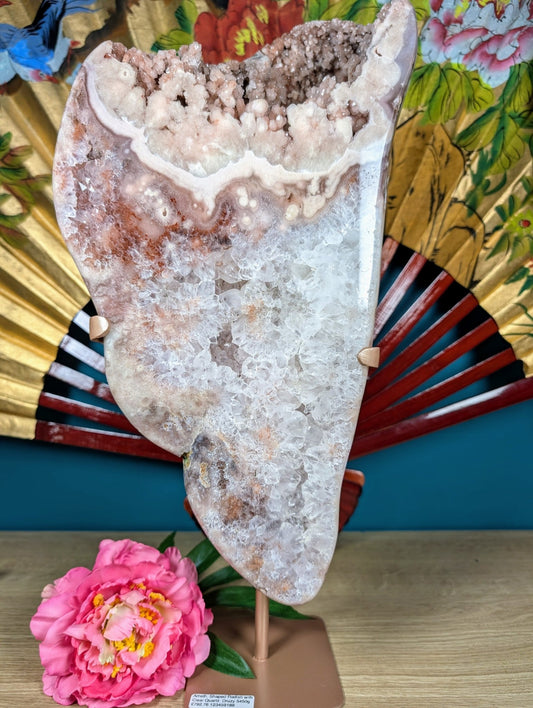
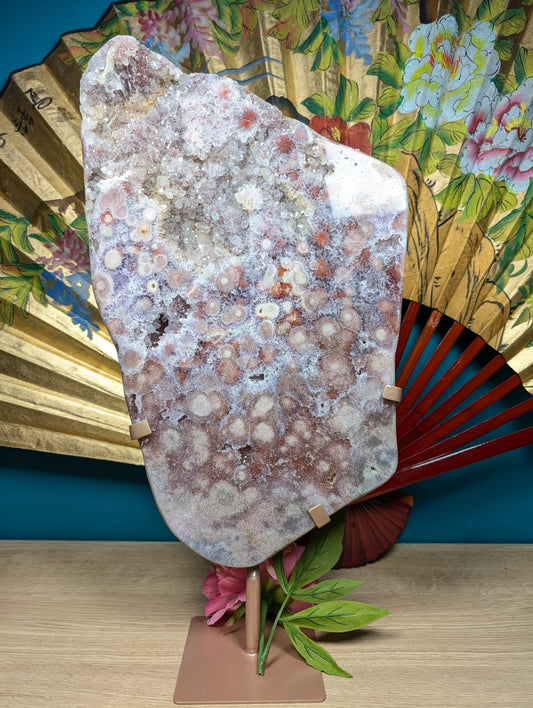
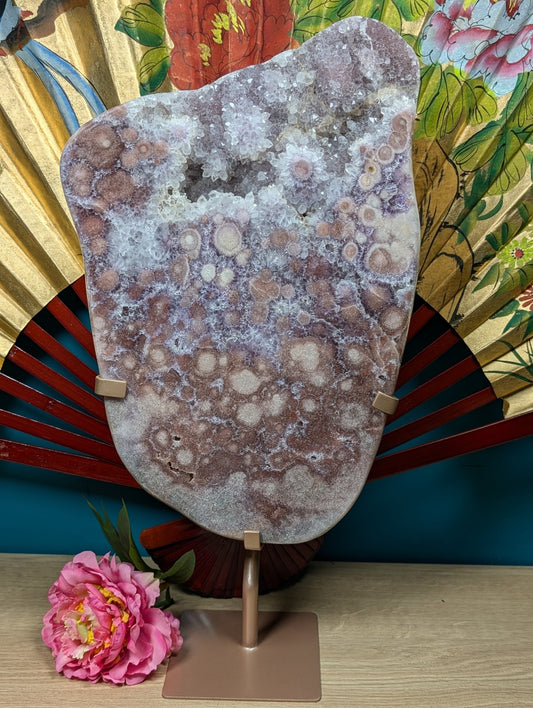
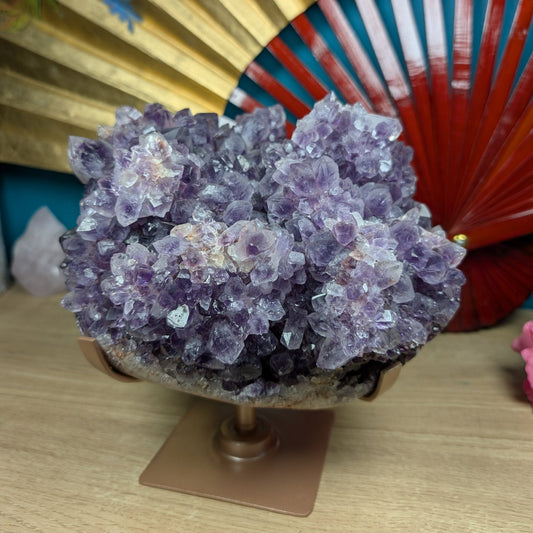
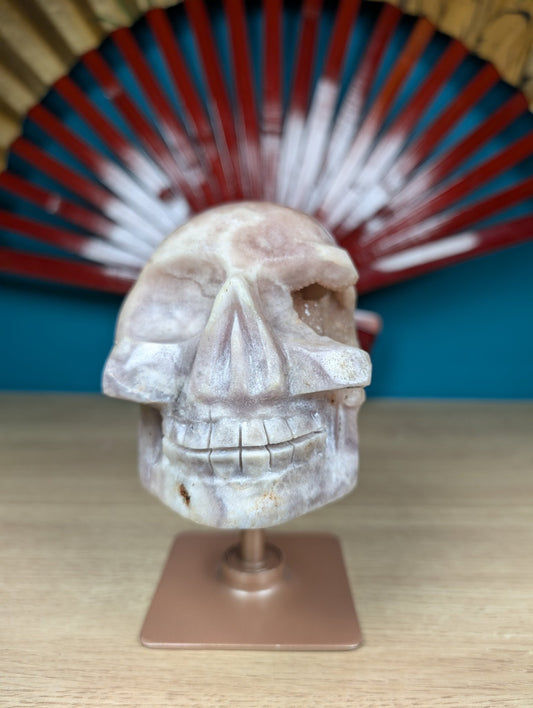
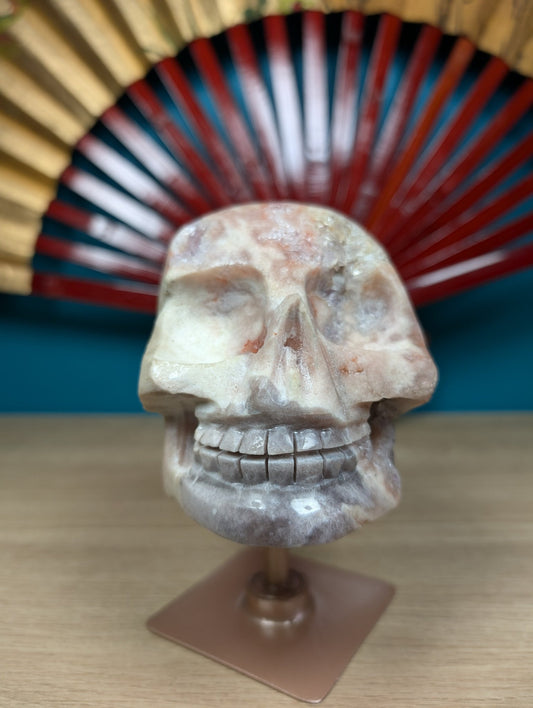
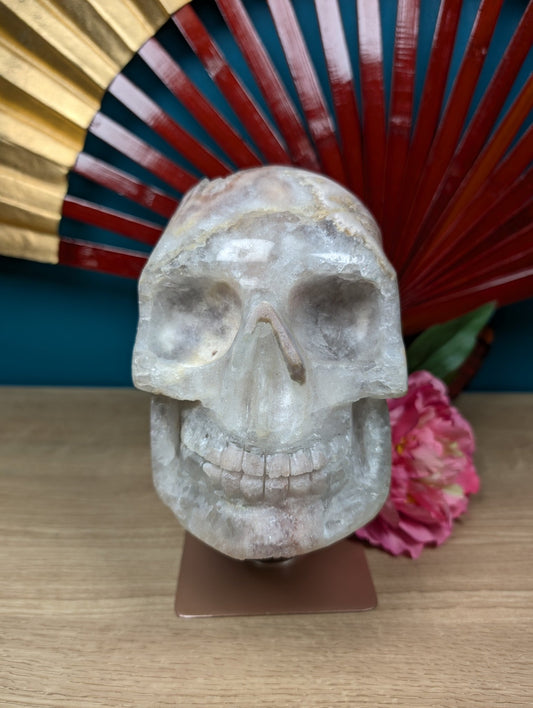
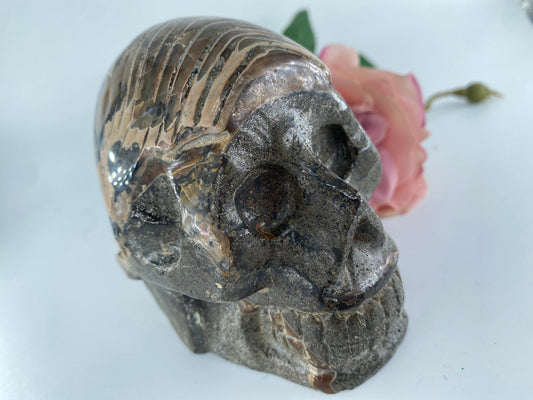
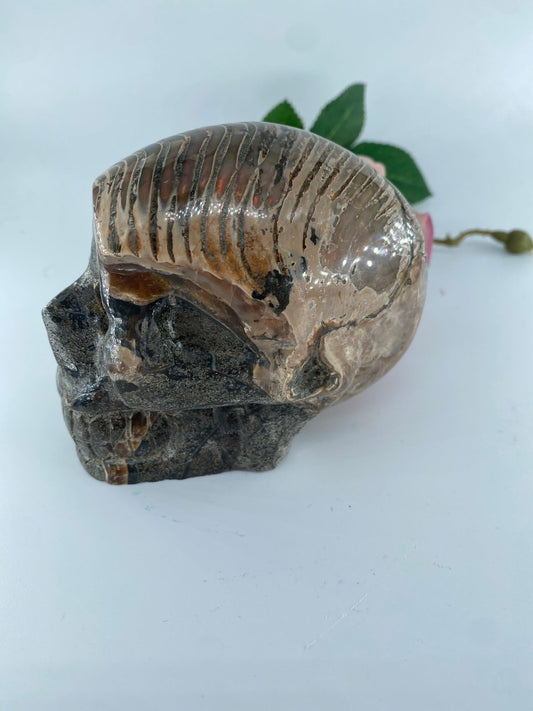
A natural association of Scapolite with Albite, showing contrasting crystal habits and clean, study-friendly surfaces. At 48.31 g, this compact piece offers excellent teaching value and visual interest for cabinet or drawer display.
Why it’s interesting
Classic two-species pairing: prismatic/tetragonal scapolite set against white albite feldspar.
Textural contrast: vitreous scapolite faces and lighter albite matrix create crisp definition for photography and study.
Reference quality: helpful for distinguishing feldspar from scapolite in hand specimen.
Details
Minerals: Scapolite with Albite
Form: Natural specimen (scapolite prismatic to columnar; albite granular/tabular)
Weight: approx. 48.31 g
Origin: Not specified
Listing: 1 × specimen (as pictured)
Mineralogical notes
Scapolite: tetragonal; colour may range colourless–grey–honey; vitreous lustre; Mohs ~5–6; cleavage distinct.
Albite: triclinic plagioclase; typically white to off-white; vitreous; Mohs ~6–6.5; perfect cleavage in one direction.
Streak: white (both); SG: scapolite ~2.5–2.7, albite ~2.62.
Fluorescence: some scapolite fluoresces yellow–orange under UV (not guaranteed for this piece).
Paragenesis: common in marbles, skarns and pegmatitic environments.
Suggested uses
Reference sample for differentiating feldspar vs. scapolite in hand specimen.
Educational display for crystal systems (tetragonal vs. triclinic) and cleavage contrasts.
Excellent subject for macro and hand-lens photography.
Care
Handle with care—scapolite has distinct cleavage and can chip along prisms.
Dust gently with a soft brush; avoid soaking, acids and ultrasonic cleaning.
Store separately or cushioned to protect edges and crystal faces.
Note: Natural mineral specimens show inherent variations, contact points and minor imperfections—each piece is unique.